Pax Silica Should Be a Green City, Not Just an AI Zone
A conditional argument for Pax Silica: if the Philippines hosts AI and semiconductor infrastructure, it should demand a green-tech city that captures local value, protects communities, and remains under Philippine control.
Why I care about Pax Silica
I have a bias here, and I want to state it upfront: I am an AI developer and engineer. I want the Philippines to participate in the AI and semiconductor future, not merely consume the products of it from the outside. I do not want us to only be users of models, subscribers to cloud services, or a market for tools built somewhere else. I want the country to have a real stake in the infrastructure, talent, supply chains, and industries that will define the next decades.

A photorealistic green-tech city vision for a Pax Silica-style district
That is why I do not look at Pax Silica as a simple yes or no issue. The better question is this: if Pax Silica goes through, what kind of place are we willing to build?
If the answer is just another fenced industrial estate, another enclave where foreign capital captures most of the upside while local communities absorb the externalities, then the criticism is not only valid. It is necessary. But if the answer is a properly planned, green, high-technology city that combines AI infrastructure, semiconductor supply chains, renewable energy, circular water systems, Filipino technical talent, dignified non-tech work, and livable urban design, then the conversation becomes more interesting.
My position is simple. Pax Silica should not become just an AI zone. If it happens, it should become the Philippines' first true green-tech city.
The status quo is not environmental virtue
One of the arguments against projects like Pax Silica is environmental harm. That concern should not be dismissed. AI infrastructure, advanced manufacturing, and semiconductor-related supply chains are not magically clean just because the output is digital. Compute requires electricity. Facilities require cooling. Manufacturing requires land, logistics, water, materials, chemicals, and waste controls. The physical footprint is real.
But we also need to be honest about the baseline. The Philippines is not choosing between an untouched ecological paradise and industrial development. We are choosing from within an already damaged, underplanned, and unevenly governed environment. We already deal with polluted waterways, weak land-use planning, illegal dumping, quarrying issues, traffic emissions, flooding, poor drainage, informal development in risky areas, and extractive projects that often get far less public scrutiny than high-profile foreign-backed initiatives.
That does not mean we should accept environmental damage casually. It means we should stop pretending that underdevelopment is the same thing as environmental protection. A country can be poor and still degrade its land. A city can lack heavy industry and still be polluted, flooded, unwalkable, hot, and wasteful. The real choice is not between development and nature. The real choice is between bad development and better development.
So I do not think environment should be used as a blanket argument against development. The stronger argument is that if we are going to accept environmental cost, the country must receive real national capability in return, and the project must be designed to reduce, monitor, and pay for its impact.
That is the standard. Not development at any cost. Not no impact at all. The standard should be high-value development with accountability, transparency, and long-term local benefit.
AI is not just software
A lot of public conversations about AI still treat it as if it only exists inside apps and chatbots. But anyone who works close to the field knows that AI has a physical backbone. AI needs compute clusters, GPUs and accelerators, data centers, cooling systems, fiber connectivity, stable electricity, technical operations teams, cybersecurity, manufacturing inputs, specialized logistics, semiconductor supply chains, engineers, technicians, researchers, and builders.
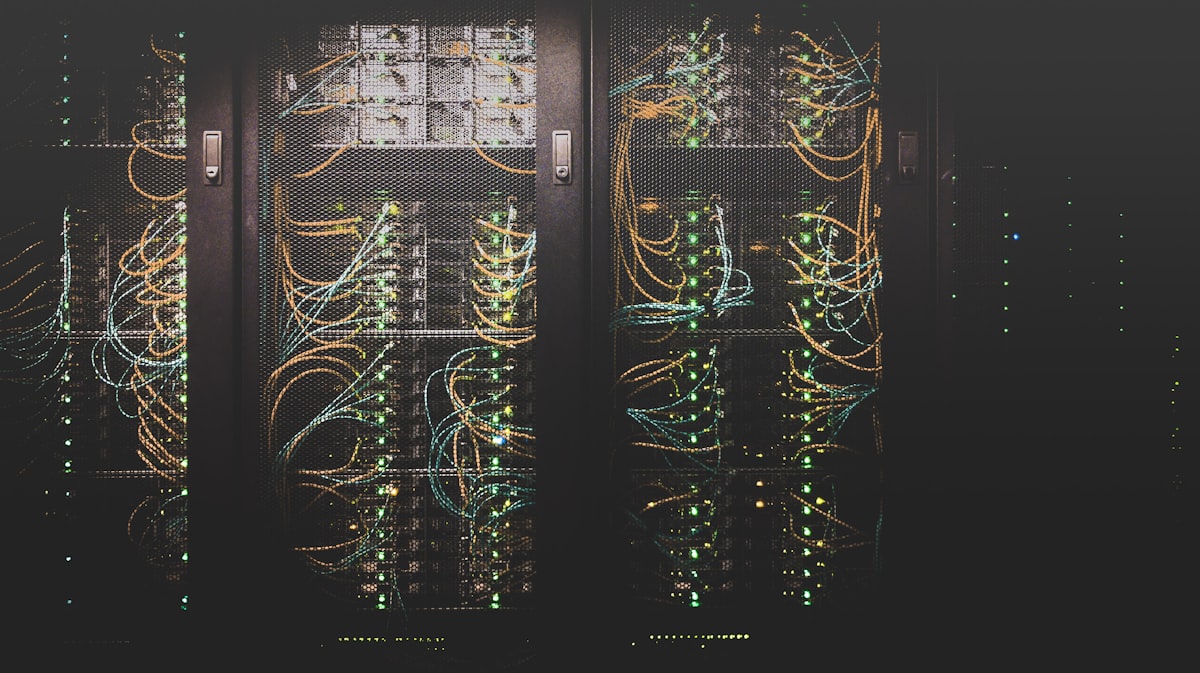
Photorealistic AI infrastructure integrated into a greener city
The cloud is still somewhere. The model is still running on machines. The machines still consume power. The facilities still sit on land. That is why the physical design of Pax Silica matters.
If the Philippines is going to host part of the AI and semiconductor supply chain, then we should not treat urban design, environmental planning, energy planning, workforce planning, and local capability building as side issues. They are central to whether the project becomes transformative or extractive.
An AI hub that only imports hardware, consumes power, hires a narrow layer of specialists, and exports most of the strategic value would be a weak bargain. A stronger version would build the surrounding ecosystem: facilities operations, power engineering, thermal management, data center maintenance, chip packaging, materials handling, quality control, cybersecurity, applied AI research, local startups, training centers, and Philippine suppliers that can grow alongside the anchor tenants.
This is why I think the public debate should move beyond whether AI is good or bad. AI is already becoming part of the global economic base. The more useful question is whether the Philippines will remain downstream of that base, or whether we will build the institutions, infrastructure, and skills needed to participate with leverage.
The opportunity is real, but only if we capture value
Public descriptions of Pax Silica frame it as a U.S.-led economic security initiative focused on AI, semiconductors, critical minerals, electronics, and resilient supply chains. The Philippines has been discussed as a host for a large industrial hub in the Luzon Economic Corridor, with the U.S. Embassy describing plans for a 4,000-acre Economic Security Zone under the Pax Silica framework. Source
That kind of scale can matter. But scale alone is not enough. The Philippines should not settle for being a land provider, labor pool, and power sink. If this project proceeds, the country should demand value capture in concrete terms: Filipino engineers trained for AI infrastructure and semiconductor operations, local supplier development, research partnerships with Philippine universities, startup zones for Filipino founders, technical institutes for advanced manufacturing and data center operations, technology transfer where possible, strong tax and reinvestment structures, long-term public infrastructure benefits, and career ladders beyond low-wage support roles.
If the project produces mostly foreign-owned upside and limited local capability, then it will fail the strategic test. The goal should be industrial upgrading, not just industrial hosting.
That means the project should be judged by what remains after the headlines fade. Do we get a stronger technical workforce? Do local firms become suppliers? Do universities gain serious research partnerships? Do Filipino engineers move into higher-value roles? Do nearby communities gain better transport, water systems, public space, and services? Do we build a durable industrial base, or just a site that happens to sit on Philippine land?
The question is not whether foreign capital is involved. Foreign capital will almost certainly be involved. The question is whether the Philippines negotiates from a position of seriousness. A serious host country defines the outcomes it wants, writes them into agreements, and measures whether they are actually being delivered.
Non-tech jobs are part of the strategy
There is another piece of the conversation that should not be treated as secondary: the non-tech jobs. A green-tech city cannot be built only for AI engineers, chip specialists, researchers, and startup founders. If Pax Silica becomes a real city and not just a specialized industrial campus, it will need a much wider employment ecosystem around it.

Photorealistic view of dignified non-tech work in a green-tech city
That wider ecosystem includes construction workers, electricians, plumbers, welders, equipment operators, logistics staff, drivers, facilities maintenance teams, HVAC and cooling technicians, water treatment operators, waste management workers, landscapers, urban forestry teams, public transit operators, security personnel, sanitation teams, food service workers, retail workers, nurses, clinic staff, emergency responders, teachers, trainers, administrative staff, local suppliers, vendors, and small business owners.
That matters because the promise of an AI-era city should not be limited to people who can write code or work directly with advanced manufacturing equipment. The better version of Pax Silica is not an AI city for tech workers. It is a green industrial city where the technical core creates a broader local economy around it.
But that only works if the non-tech jobs are treated as dignified work, not disposable support labor. The project should include local hiring pipelines, apprenticeships, fair wages, safety standards, benefits, transport access, and career progression for workers outside the narrow tech sector.
This is especially important for affected communities. If farmers, residents, or nearby towns are asked to carry the disruption, then the promise of jobs is not enough. The jobs must be reachable, stable, and meaningful for the people actually being asked to adjust. In that sense, the non-tech employment ecosystem is not a side benefit. It is part of the social license for the project.
A project like this can either deepen inequality or widen opportunity. If the only people who benefit are executives, landlords, foreign firms, and a small technical elite, resentment will be justified. But if the development creates a ladder of work across technical, operational, service, public, and small business roles, then it becomes easier to argue that the project is not only an investment zone. It becomes a city-building project.
A green city, not just a greener industrial estate
This is where I think the public debate should shift. If Pax Silica is going to happen, the demand should not merely be to make it less harmful. The demand should be to make it the greenest, most technically advanced, most Filipino-benefiting industrial city in Southeast Asia.
Think of the urban polish of Bonifacio Global City, but greener, more climate-conscious, more technically integrated, and less socially exclusive. A BGC with more trees is not enough. The better vision is a place with walkable districts, shaded pedestrian corridors, dense mixed-use planning, electric public transit, internal shuttle systems, usable bike networks, green roofs, solar canopies, public parks, biodiversity corridors, water-sensitive urban design, flood-resilient drainage, industrial water recycling, public environmental dashboards, affordable and accessible worker housing, training centers, research labs, startup spaces, and public plazas that do not feel like private corporate leftovers.
In aesthetic terms, I admit my bias: I like Frutiger Aero, that optimistic, glassy, blue-green, water-and-sky version of the future. But underneath the aesthetic is a serious point. Technology should not make cities feel harsher, hotter, more exclusive, and more inhuman. It should make them more livable.
If Pax Silica becomes a futuristic zone of concrete, glass, fences, heat, security checkpoints, and luxury real estate, then it will be a missed opportunity. If it becomes a green, walkable, water-circular, renewable-powered, research-driven district that trains Filipino talent and anchors a real AI-industrial ecosystem, then it could be a national model.

Photorealistic circular water, transit, and green infrastructure for an AI-era industrial city
The country should not accept the old model of development dressed in futuristic language. A green city should not be a marketing label attached to a few landscaped roads and glass buildings. It should be measurable in the daily experience of the place. Can people walk safely under shade? Can workers commute without owning a car? Is there housing near work? Are parks public and usable? Are drainage systems designed for stronger storms? Are heat islands reduced? Are water systems circular? Are emissions and waste monitored? Are small businesses welcome, or is every public space curated for only premium tenants?
Those details sound ordinary, but they are the difference between a city and a corporate estate. A real city has texture. It has workers, families, students, vendors, technicians, researchers, commuters, parks, clinics, schools, food, and public life. If Pax Silica is going to carry the language of the future, then it should not reproduce the least humane parts of present-day urban development.
Environmental assurances need proof
Government and BCDA officials have publicly responded to concerns around water use, land, mining, and environmental compliance. Reports have mentioned claims that the project would not rely on local groundwater or community water supplies, and that water needs could be addressed through rainwater harvesting, storage, treatment, and recycling systems. Source
That sounds promising. But promises are not systems. For a project this large, the environmental safeguards should not live only in press briefings. They should be embedded in contracts, permits, master plans, public reporting systems, and enforcement mechanisms.
The minimum requirements should include published water demand estimates, published power demand estimates, independent environmental impact assessments, public monitoring of water quality, air quality, energy use, waste, and noise, clear limits on groundwater extraction, circular water infrastructure, climate-resilient drainage and flood planning, ecological buffer zones, penalties for violations, and an environmental liability and restoration fund.
If the project is genuinely sustainable, then transparency should help it, not hurt it. A green city is not only about trees, water, and carbon. It is also about governance.
Public dashboards may sound like a small thing, but they matter. If the project claims to use recycled water, show the numbers. If it claims not to burden local supply, show the source and volume. If it claims to meet emissions standards, show the data. If it claims to create jobs for nearby communities, publish hiring and training outcomes. If it claims to protect affected residents, publish compensation, relocation, livelihood, and grievance mechanisms.
Trust is not built by telling people to calm down. Trust is built by making information visible, verifiable, and enforceable.
Sovereignty is also sustainability
Pax Silica must remain under Philippine law, Philippine regulation, and Philippine public accountability. There should be no special foreign jurisdiction, no immunity arrangement, and no structure that makes the area feel like a foreign enclave.
The Philippines can welcome strategic investment without surrendering strategic control. That distinction matters. The country should be open to allies, capital, technology, and global supply chains. But openness should not mean passivity. A serious host country negotiates. It sets conditions. It defines the kind of development it wants.
Sovereignty is not only a constitutional or diplomatic issue. It is also practical. Who enforces environmental rules? Who audits the operators? Who resolves disputes with workers and communities? Who controls land-use changes? Who has access to data about impacts? Who benefits from incentives? Who pays when something goes wrong?
A development can look green and still be politically unhealthy if accountability is weak. A project can use the language of sustainability while shifting risk to the public. That is why legal jurisdiction, regulatory transparency, and community voice are part of the same conversation as water, energy, and emissions.
Housing and everyday life should be designed early
One of the easiest mistakes in large industrial projects is to treat housing, commuting, food, childcare, clinics, parks, and daily services as things that can be added later. That is how you end up with long commutes, informal settlements, traffic, disconnected enclaves, and workers who serve a district they cannot afford to live near.
If Pax Silica is going to become a green-tech city, then everyday life should be part of the first plan, not the cleanup plan. Worker housing should not be an afterthought. Transit should not be an afterthought. Clinics, training centers, public schools, local markets, and open spaces should not be treated as decoration around the industrial core.
This matters for both tech and non-tech workers. A semiconductor technician working shifts, a facilities maintenance worker, a nurse in an on-site clinic, a food vendor, a security guard, an AI engineer, and a logistics coordinator all need a city that works at the human level. If the place is only beautiful from drone shots but exhausting from the sidewalk, it has failed.
A true green-tech city should make the productive life of the district compatible with a livable life for the people who sustain it.
My actual position
I am not anti-Pax Silica. I am also not blindly pro-Pax Silica. My position is conditional: yes to AI infrastructure, semiconductor supply chains, and high-value manufacturing if the Philippines captures real capability, protects affected communities, maintains legal sovereignty, and builds the project as a green city rather than an extractive enclave.
Opposition should not be dismissed, especially from communities that may directly carry the costs. But opposition should also not become automatic rejection of every industrial opportunity. The Philippines cannot build a future by refusing to build.
At the same time, we cannot afford to accept bad development simply because it carries the language of innovation. The bar should be higher. If Pax Silica proceeds, it should be held to a standard worthy of the future it claims to represent.
Not just an AI hub. Not just an industrial zone. Not just a geopolitical supply-chain node. A green-tech city. A place where the Philippines does not merely participate in the AI era but helps define what responsible AI-era development should look like.
Related Research Publications
The Kill Switch Era: Why We're Going Local-First on AI
In June 2026 the U.S. forced Anthropic to pull Claude Fable 5 and Mythos 5 worldwide and limited OpenAI's GPT-5.6 to government-approved partners. With frontier-model access now governed by trade policy, here's why As Foretold Research Labs is doubling down on local, open-weight LLMs, backed by 34 sources.
The Canvas Breach Is a Warning: Why EdTech Platforms Are Soft Targets
The 2026 ShinyHunters breach of Instructure's Canvas exposed around 275 million records across nearly 9,000 institutions, the largest education data breach on record. Here is why LMS platforms are soft targets and what it means for handling sensitive data. Backed by 26 sources.